Special Report · Cybersecurity
Billions of Stolen Passwords Are Now Circulating Online, and Most People Have No Idea Theirs Is One of Them
A record wave of data breaches has pushed emails, passwords, and even Social Security numbers onto the dark web. Security analysts warn that by the time you are notified, your information has often already been bought, sold, and used. Here is why, and what to do about it before it costs you.
If you have used the same email address for more than a few years, there is a strong chance a piece of your personal information is already sitting in a database that criminals can buy. Not because you did anything wrong, but because a company you trusted with your data was breached, and you were never told.
In the past 24 months, hackers have hit banks, hospitals, phone carriers, retailers, and social media platforms. Each breach spills millions of records into the open. And once that data is out, it does not disappear. It is bundled, sold, and re-sold on the dark web, sometimes for the price of a cup of coffee.
The scale of the problem is hard to overstate
Earlier this year, researchers compiling breach data reported a staggering figure: more than 16 billion exposed login credentials aggregated from thousands of separate leaks. That is more than two records for every person on Earth. Analysts described it not as a single "mega-breach," but as a blueprint for mass exploitation, a searchable index of who to target and how.
For the average person, the numbers translate into a simple, uncomfortable reality: your email address and at least one old password are very likely on that list. And if you reuse passwords, as most people do, a single leaked login can hand an attacker the keys to your inbox, your bank, and your social accounts.
"The old advice was 'if you get breached.' That's over. The realistic assumption today is that you have already been exposed, the only question is where, and how badly."
Sentiment echoed across recent industry breach reportsWhy you probably won't be warned in time
Here is the part that unsettles security professionals the most. According to IBM's widely cited Cost of a Data Breach research, organizations take an average of 277 days, roughly nine months, just to identify and contain a breach. That is nine months during which your information can be copied, traded, and used before anyone sends you a notification letter.
By the time a company admits it lost your data, the information has often already changed hands many times. The breach notice in your mailbox is frequently the last step in the process, not the first.
What it actually costs you when it surfaces
For most people, the damage does not arrive as a warning. It arrives as a shock: a credit card you never opened, a loan taken out in your name, savings quietly drained, a credit score that has collapsed for reasons you cannot explain. Then comes the part no one talks about, the months of phone calls, disputed charges, police reports, and paperwork it takes to prove you are you.
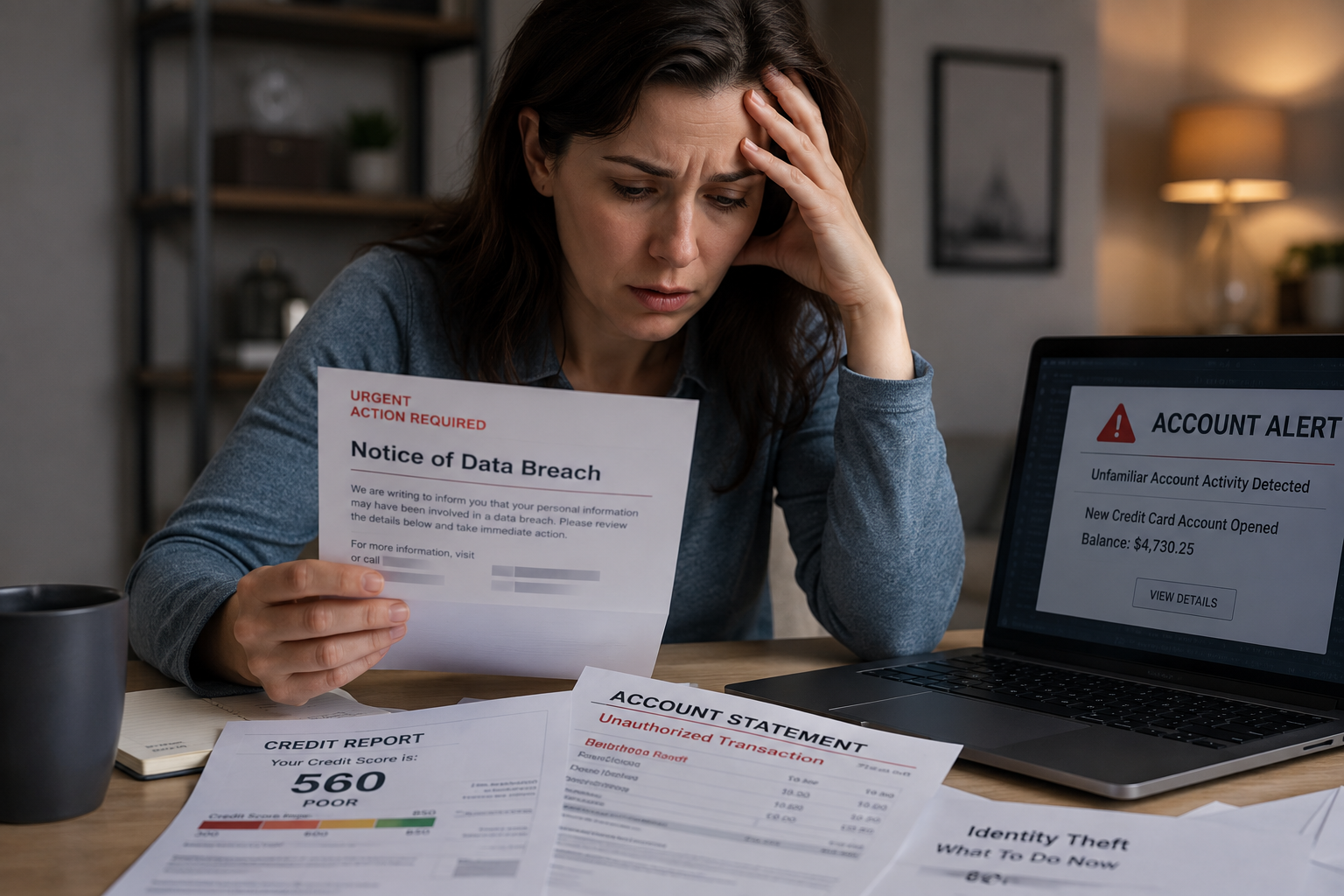
What criminals do with it: open credit lines in your name, drain or hijack accounts, file fraudulent tax returns, and impersonate you to reach your family. The U.S. Federal Trade Commission logged consumer fraud losses exceeding $10 billion in 2023, the highest on record, driven in large part by identity theft.
What's actually at risk
It is not just passwords. Depending on which companies held your data, an exposure can include your full name, home address, phone number, date of birth, Social Security number, financial account details, and even biometric data. Stitched together from multiple breaches, those fragments form a complete profile, everything a criminal needs to convincingly become you.
★ Limited Time: 30% Off This Month
Lock down your identity with OmniWatch
Continuous dark-web and credit monitoring, instant breach alerts, and expert U.S.-based recovery if anything happens. Activate protection while the 30% discount lasts.
Get Protected, 30% Off This Month →Discount applied at checkout · Cancel anytime per OmniWatch's terms
How to shut the door before it costs you
You cannot un-leak data that is already out there. What you can do is make it useless to criminals, by knowing the moment your information appears and shutting down the accounts and access before anyone exploits them. That is exactly what a monitoring service does, and one that has drawn attention for how clearly it presents results is OmniWatch.
OmniWatch scans known breach sources and the dark web for your personal information, then keeps watching around the clock. Enter your email and within seconds it returns a risk assessment showing whether your data appears exposed, and what kind of data is out there.
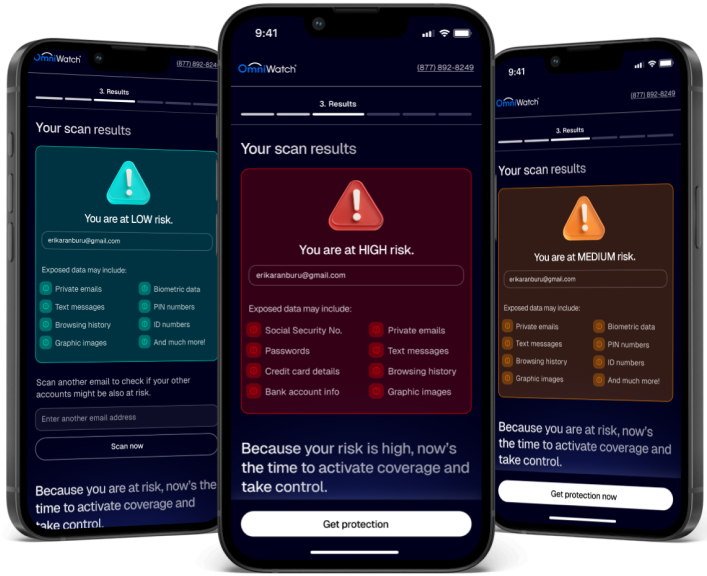
OmniWatch returns a clear Low, Medium, or High risk rating and lists the categories of exposed data, from passwords and email to Social Security and financial details.
What OmniWatch does for you
Protection that keeps working long after a one-time check would have gone stale.
- Dark web monitoring for your SSN, logins and credentials
- Real-time credit monitoring and alerts
- One-tap credit lock to stop new accounts fast
- Instant breach alerts the moment you are exposed
- Auto-Scan scam detection for suspicious texts and emails
- Email monitoring across Gmail and Outlook
- Automatic VPN and antivirus plus ad blocking
- Identity-theft insurance and 24/7 U.S. restoration*
Why waiting is the one thing you can't afford
Identity theft is not like a fraudulent charge you can simply reverse. Once your Social Security number and personal details are in circulation, they stay in circulation, resold and reused for years. The people who avoid the worst of it are almost never the ones who scrambled after an incident. They are the ones who were already being watched before it started.
Every week you wait, your exposure can grow, silently. New breaches happen constantly, and data that was safe last month can surface next week. Continuous monitoring will not undo a past breach, but it turns an invisible risk into a visible one you can act on, before a stranger acts on it first. And right now, that protection is 30% off.
★ 30% Off Ends This Month
Don't wait for a breach notice that comes too late
Protect your identity with continuous monitoring, alerts, and expert recovery, now 30% off for new members.
Claim 30% Off & Get Protected →Takes about a minute to start · Discount applied at checkout
This article is sponsored content produced on behalf of an advertiser. It is intended for general information and is not professional security, legal, or financial advice. Individual results vary; no service can guarantee prevention of identity theft or removal of all exposed data.